
National Dog Week: Supporting Veterinary Clinics Through Safe, Compliant Waste Management
How veterinary practices can protect their teams, their patients, and their compliance record — while honoring the dogs who bring so much to our lives.
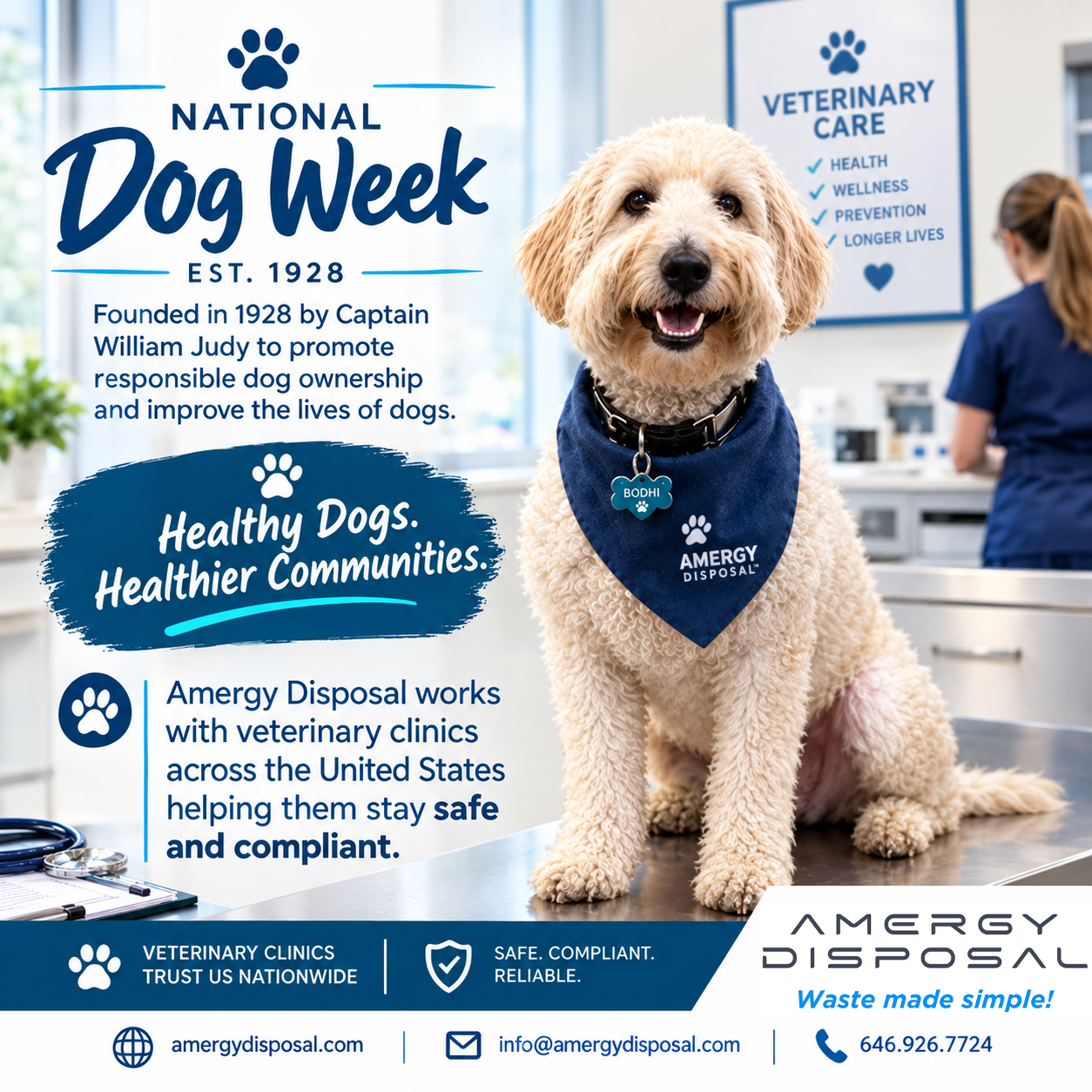
Every September, National Dog Week gives us an opportunity to recognize the important role dogs play in our families and communities. Founded in 1928 by Captain William Judy, National Dog Week was created to promote responsible dog ownership and improve the lives of dogs.
Today, that mission continues in veterinary clinics across the country. Every day, veterinarians, veterinary technicians, assistants, and support teams work behind the scenes to keep animals healthy and provide the compassionate care pet owners depend on.
However, excellent veterinary care involves more than treating patients. It also requires a safe, organized, and compliant environment—including the proper management of veterinary medical waste.
That is where having the right waste-management partner can make a meaningful difference.
Veterinary Clinics Have Unique Waste-Management Needs
Veterinary practices generate a variety of waste streams as part of their daily operations. From routine vaccinations and examinations to surgeries and more complex treatments, the waste generated by a veterinary clinic needs to be handled appropriately.
For example, veterinary facilities may generate:
- Regulated medical waste
- Sharps and needles
- Red bag waste
- Pharmaceutical waste
- Trace chemotherapy waste
- Hazardous pharmaceutical waste
- Pathological waste
- Laboratory waste
- Non-hazardous waste
- Confidential documents and records
Because these waste streams can have different handling and disposal requirements, proper segregation at the point of generation is essential.
In addition, medical-waste regulations can vary by state. The U.S. Environmental Protection Agency notes that medical waste is primarily regulated by state environmental and health departments, making it especially important for veterinary practices operating in multiple locations—or those expanding into new states—to understand applicable requirements.
Safety Starts With Proper Sharps Management
One of the most important considerations in a veterinary environment is the safe handling of sharps.
Needles, syringes, scalpels, and other sharp instruments can create significant injury risks when they are improperly handled or discarded. OSHA identifies needlestick injuries as a concern in veterinary settings and emphasizes appropriate sharps containers and safe work practices.
Furthermore, OSHA requirements for regulated sharps include appropriate containment characteristics such as being closable, puncture-resistant, and leakproof on the sides and bottom, along with appropriate labeling or color coding where applicable.
Therefore, veterinary clinics should look beyond simply having a sharps container available. They should also consider whether containers are appropriately sized, positioned, replaced before overfilling, and managed through a compliant disposal process.
A properly designed waste program helps protect veterinary professionals, support staff, waste handlers, and the environment.
Pharmaceutical Waste Requires Special Attention
Veterinary medicine also involves medications that require appropriate management when they are expired, unused, partially used, or otherwise ready for disposal.
The EPA specifically recognizes veterinary clinics and veterinary hospitals within its definition of healthcare facilities for purposes of hazardous-waste-pharmaceutical management.
Consequently, pharmaceutical waste should not simply be treated like ordinary trash.
Depending on the medication and applicable regulations, veterinary facilities may need specialized processes for managing pharmaceutical waste. This makes proper identification, segregation, storage, documentation, and disposal an important component of an effective veterinary waste-management program.
For veterinary practices, the goal is simple: know what you generate, know how it should be managed, and have a reliable system for getting it from the clinic to the appropriate final destination.
Compliance Doesn’t Have to Be Complicated
While compliance is critical, managing veterinary medical waste shouldn’t become an administrative burden for the practice.
Veterinary professionals already have enough responsibilities. They are caring for patients, communicating with pet owners, managing staff, maintaining equipment, and running a business.
As a result, having a responsive waste-management provider can help take one more responsibility off the clinic’s plate.
At Amergy Disposal, we work with veterinary clinics across the United States, helping them stay safe and compliant.
Our approach is built around providing practical waste-management solutions while helping veterinary teams focus on what they do best: caring for animals.
A Better Approach to Veterinary Waste Management
At Amergy Disposal, we understand that veterinary practices aren’t all the same.
A small animal clinic may have very different waste requirements than a large veterinary hospital, specialty practice, emergency facility, or multi-location veterinary organization.
That’s why a one-size-fits-all approach doesn’t always make sense.
Amergy Disposal provides solutions for veterinary facilities that can include:
- Regulated medical waste disposal
- Sharps disposal
- Red bag waste management
- Pharmaceutical waste
- Trace chemotherapy waste
- Hazardous drug waste
- Pathological waste
- Non-hazardous waste
- OSHA compliance support
- Training and compliance resources
- Medical-waste supplies
- Waste audits and assessments
Most importantly, we believe veterinary clinics should have access to a waste-management partner that is responsive, knowledgeable, and easy to work with.
Making Waste Management Simple for Veterinary Teams
The best waste-management program is one that works seamlessly with the way a clinic operates.
That means appropriate containers. That means dependable service. That means clear communication. That means understanding compliance requirements. And, perhaps most importantly, that means having someone available when you need help.
At Amergy Disposal, we believe waste management should be simple—not another headache for your veterinary team.
Our team works with veterinary clinics throughout the United States to develop practical solutions for their medical-waste needs while helping them maintain safe and compliant operations.
Celebrating the People Behind Veterinary Care
National Dog Week is ultimately about more than dogs.
It’s also an opportunity to recognize the people who dedicate their careers to caring for them.
From the veterinarian performing a surgery to the veterinary technician preparing an exam room, every member of a veterinary team contributes to the health and well-being of the animals entrusted to their care.
And while Amergy Disposal may not be the ones providing the treatment, we’re proud to support the people who do.
Because when veterinary professionals have the right systems, supplies, and waste-management support behind them, they can spend more time doing what matters most—taking care of their patients.
Let Amergy Disposal Help Your Veterinary Clinic Stay Safe and Compliant
Whether you’re operating a single veterinary practice or managing multiple locations, we can help you develop a veterinary medical-waste program designed around your needs. Don’t let medical waste become complicated. Let us make it simple.
Waste made simple.