
Infection Prevention Week: Why Safe Medical Waste Disposal Matters
Clean hands and clean rooms get the spotlight. Proper waste handling is the step that keeps them that way.
International Infection Prevention Week runs October 18 to 24, 2026. It is a good time for every healthcare facility to take a fresh look at how infections spread and how to stop them.
Most people think of hand hygiene, PPE, and vaccines. Those matter. But there is another piece that often gets overlooked: what happens to used sharps, soiled supplies, and other regulated medical waste after patient care is done.
At Amergy Disposal, waste is our whole focus. So for Infection Prevention Week, here is a practical look at how your disposal program supports infection control, plus a checklist you can use with your team this week.
What Is Infection Prevention Week?
International Infection Prevention Week (IIPW) was established in 1986. It is led by the Association for Professionals in Infection Control and Epidemiology (APIC) and is held each October.
The goal is simple. Raise awareness about stopping the spread of infection and recognize the infection preventionists who do this work every day. Hospitals, clinics, dental offices, surgery centers, and public health groups around the world take part.
How Medical Waste Connects to Infection Prevention
Infection control does not end when a procedure ends. Used needles, blood-soaked gauze, and contaminated items can still carry bloodborne pathogens. If they are handled the wrong way, they put staff, patients, housekeeping crews, and waste workers at risk.
A strong disposal program cuts off that risk at three points:
At the point of use
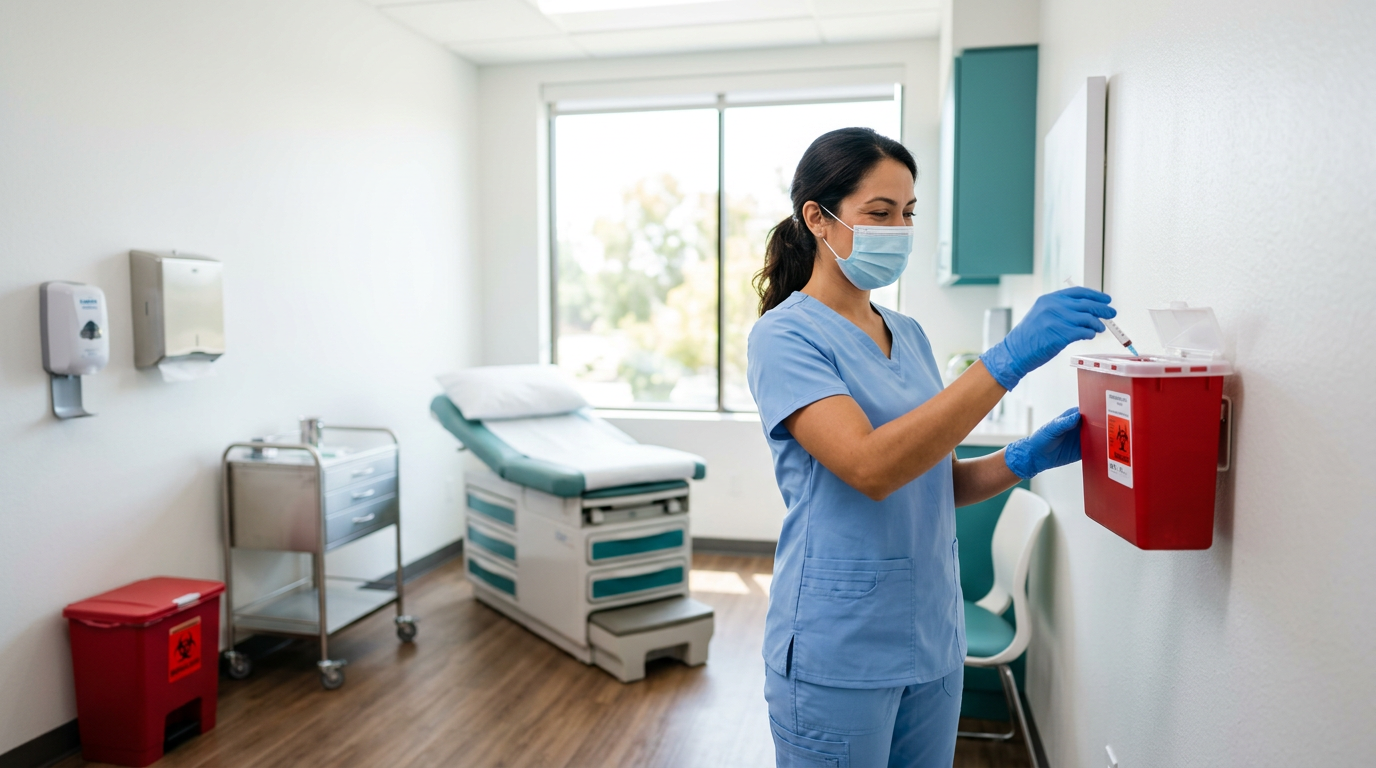
Sharps go straight into a container. Nothing gets recapped, carried across the room, or left on a tray.
In storage
Waste stays sealed, labeled, and secured until pickup, away from patients and public areas.
In transport and treatment
A licensed hauler removes it, treats it, and documents every step so nothing is lost along the way.
5 Medical Waste Practices to Review This Infection Prevention Week
1. Use the right sharps containers and never overfill them
Under the OSHA Bloodborne Pathogens Standard , sharps containers must be closable, puncture resistant, leakproof on the sides and bottom, and labeled or color coded. Keep them upright and close to where sharps are used.
Overfilled containers are a leading cause of needlestick injuries. Replace them when they reach the fill line. Do not push items down or shake them to make room.
2. Segregate waste correctly
Red bag waste, sharps, pharmaceutical waste, chemotherapy waste, and regular trash all have their own path. When they get mixed, two things happen. Staff get exposed to items they did not expect, and your disposal costs go up because ordinary trash gets treated as regulated waste.
Post simple signs at every disposal station that show what goes where.
3. Store waste safely until pickup
Keep regulated medical waste in a secure, clearly marked area that only trained staff can access. Containers should be closed, labeled with the biohazard symbol, and kept off the floor where possible. Many states also limit how long waste can sit before it must be picked up, so know your state’s rules.
4. Train your team every year
OSHA requires bloodborne pathogens training at the time of hire and at least once a year after that. Infection Prevention Week is a natural time to schedule a refresher. Cover sharps handling, waste segregation, spill response, and what to do after an exposure.
5. Keep your paperwork current
Your exposure control plan should be reviewed and updated at least once a year. If your facility is required to keep a sharps injury log , make sure it is up to date. Keep your waste manifests and treatment records organized and easy to find in case of an inspection.
Quick tip: Walk your facility this week and look at every sharps container. Check the fill level, the mounting, and the label. It takes 15 minutes and often turns up at least one problem.
Infection Prevention Week Checklist for Your Facility
Use this list at your next staff huddle:
- Sharps containers are within reach of every point of use
- No container is above its fill line
- Red bags and sharps containers carry the biohazard label
- Signs at each station show what waste goes where
- Waste storage area is secured, labeled, and clean
- Bloodborne pathogens training is current for every employee
- Exposure control plan has been reviewed in the past 12 months
- Spill kits are stocked and staff know where they are
- Pickup schedule matches your waste volume and state limits
- Manifests and disposal records are filed and easy to pull
How Amergy Disposal Supports Infection Prevention
Amergy Disposal provides regulated medical waste disposal and compliance services across the 48 continental states. We work with medical offices, dental practices, veterinary clinics, surgery centers, home health providers, and more.
Here is what that looks like for your facility:
- Sharps containers and red bag supplies sized for your volume
- Reliable pickups on a schedule that fits your state’s rules
- Pharmaceutical and chemotherapy waste handling
- Tracking documentation for every shipment
- OSHA compliance support and staff training resources
Our job is to make the disposal side simple, so your team can stay focused on patient care.
Frequently Asked Questions
When is Infection Prevention Week 2026?
International Infection Prevention Week 2026 runs from October 18 to October 24. It is held every year in October.
Who organizes International Infection Prevention Week?
The Association for Professionals in Infection Control and Epidemiology (APIC) leads the week. It was first recognized in 1986.
How does medical waste disposal help prevent infections?
Proper disposal keeps contaminated sharps and materials sealed and away from people from the moment they are used until they are treated. That lowers the risk of needlestick injuries and exposure to bloodborne pathogens.
How often do staff need bloodborne pathogens training?
OSHA requires training when an employee is hired and at least once a year after that. Extra training is needed when tasks or procedures change.
When should a sharps container be replaced?
Replace a sharps container when it reaches the manufacturer’s fill line. Never overfill it or force items inside.
Make This Infection Prevention Week Count
Get a free quote on medical waste disposal that keeps your team safe and your facility compliant.
Get a Free QuoteWaste made simple!